


Household Gardening Items: Why Choose Plastic
21 May 2025Productions
When it comes to household gardening items like pots, saucers, and planters, there is a wide range of materials to choose from. Among the most common are terracotta, wood, concrete, metal, ceramic, glass, and of course, plastic.
Each material has its own characteristics, advantages, and some limitations. When choosing, several factors should be considered, including the type of plant, the location of the pot (indoors or outdoors), and not least, the aesthetic effect you want to achieve.
Why Choose Plastic for Pots and Planters?
In the past, plastic was often underestimated in the world of gardening, but today it is one of the most practical and appreciated choices.
Plastic pots and planters are usually made from polyethylene, polyvinyl chloride, or polypropylene. Undoubtedly, they offer a range of qualities that other materials don’t. In particular:
-
Lightweight: Plastic household gardening items are easy to move, even when full. This makes them ideal for those who like to frequently change their plant layout or need to move them based on the seasons. Especially great for those who aren’t particularly strong!
-
Durability: They don’t break easily when bumped, which means they last longer. Plus, they are designed to withstand weather conditions like rain, sun, frost, and temperature swings. These features make plastic pots and planters an excellent choice for outdoor plants.
-
Affordability: Generally, plastic pots, saucers, and planters are more budget-friendly compared to other materials, without sacrificing quality and longevity. This makes it possible to choose from a wide range of options even with a limited budget.
-
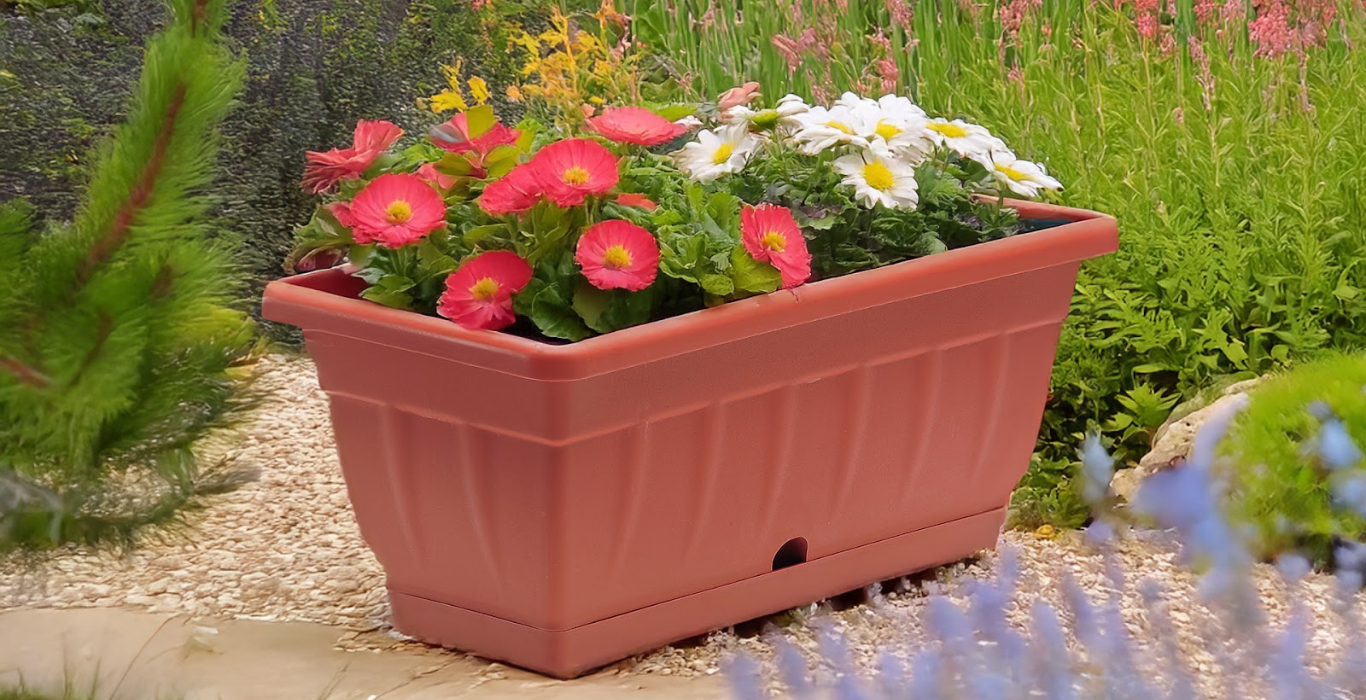
Aesthetic Variety: Today, plastic pots and planters come in finishes that mimic terracotta and concrete, which better satisfy aesthetic preferences. They are available in many shapes and colors, making them suitable for every style—from classic to modern.
-
Easy to Clean: Unlike other materials, removing soil, dirt, and dust from plastic gardening items only requires a damp cloth. Maintenance is therefore minimal.
-
Great for Contemporary Spaces: The clean and functional design of plastic gardening items fits perfectly into urban terraces, minimalist balconies, and modern gardens.
Pros and Cons of Other Materials for Gardening Household Items
In general, there is no one-size-fits-all perfect material! Much depends on personal needs, the type of plant, and the environment. Here’s a look at the main pros and cons of the most common gardening materials other than plastic:
-
Terracotta: Beloved for its rustic and natural look, it’s breathable and suitable for plants that don’t like excess moisture. However, it’s heavy, fragile, and tends to get dirty easily.
-
Stone or Concrete: Solid and durable, ideal for fixed and permanent spaces. On the downside, they are very heavy and hard to move.
-
Wood: Visually pleasing and perfect for rustic settings. However, it needs treatment to resist moisture, wear, and weather elements.
-
Ceramic and Glass: Very decorative and suitable for indoor plants. However, they are fragile and not well-suited for outdoor use.
-
Metal: Modern and elegant, but prone to overheating and rust unless properly treated.
Are Terracotta Pots Better? Not Necessarily—Here’s How to Make the Most of Plastic Pots and Planters
The old belief that terracotta pots are always the best choice for plants isn’t necessarily true. Aside from being heavy and fragile, the main difference between plastic and terracotta gardening items lies in how they affect plant breathability.
It’s true that terracotta is a porous, breathable material that allows more air to circulate through the soil, helping to prevent water stagnation.
Plastic is less breathable but retains moisture more effectively. This isn’t always a disadvantage—on the contrary, in some cases, it’s a benefit. For example, plastic pots are better suited for plants that need to stay consistently moist. Likewise, they better protect plants in hot or windy environments where the soil tends to dry out quickly.
With a few simple precautions, you can avoid waterlogging issues and keep the soil healthy. These include adding a drainage layer at the bottom of plastic garden pots (such as expanded clay or gravel) and managing watering properly (e.g., watering less frequently). In addition, plastic pots provide better insulation for plant roots during winter because they retain heat more effectively than terracotta.